Shares were mixed in Europe and Asia on Tuesday after a drop in oil prices helped send the U.S. stock market to its best day since the war in Iran began.
The reprieve in prices for crude was short-lived, with Brent crude climbing nearly 4% early Tuesday to $104.13 a barrel. U.S. benchmark crude also climbed, to $97.53 per barrel after dipping to about $93 on Monday.
U.S. futures fell back, with the contracts for the S&P 500 and the Dow Jones Industrial Average down 0.3%.
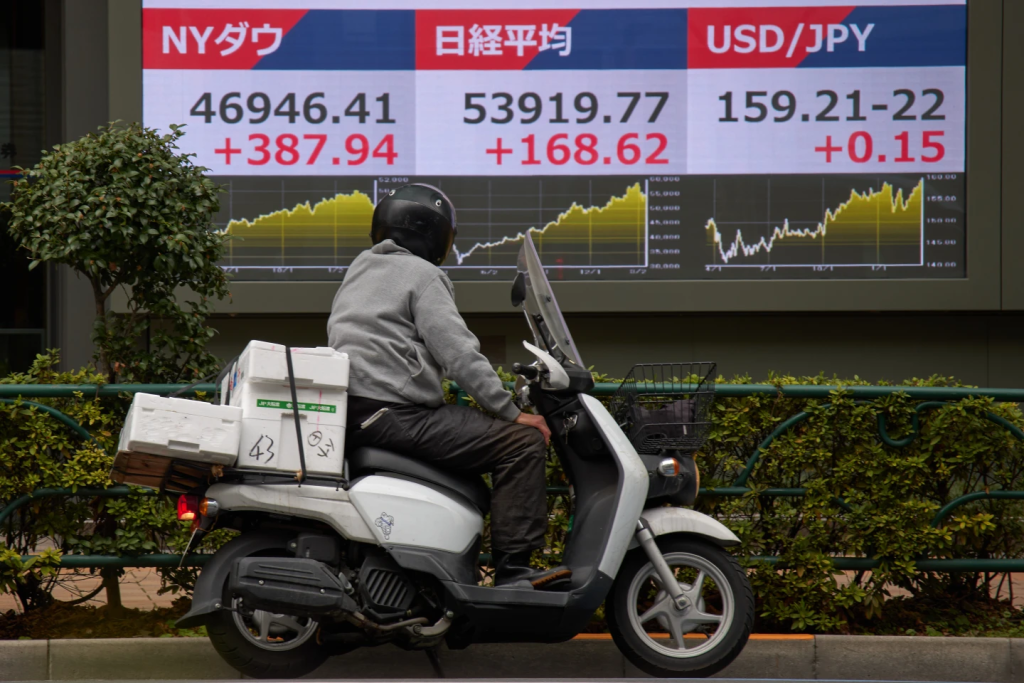
In Asian trading, Tokyo’s Nikkei 225 gave up early gains to slip 0.1% to 53.700.39 and the Kospi in South Korea jumped 1.6% to 5.640.48.
Hong Kong’s Hang Seng added 0.1% to 25.668.54. while the Shanghai Composite index dropped 0.9% to 4.049.91.
In Australia, the S&P/ASX 200 gained 0.4% to 8.614.30 after the central bank hiked its benchmark interest rate to 4.1%.
Citing higher fuel prices, the Reserve Bank of Australia on Tuesday lifted the cash rate from 3.85% which it set at its Feb. 3 meeting in response to surging inflation. That rise was Australia’s first since November 2023.
Taiwan’s Taiex rose 1.5% and India’s Sensex picked up 0.6%.
On Monday, the S&P 500 climbed 1% for its biggest gain in five weeks. The Dow Jones Industrial Average added 0.8% and the Nasdaq composite jumped 1.2%.
The driver for markets has been oil prices, which have spiked from roughly $70 before the United States and Israel began their attacks on Iran. In response, Iran has nearly halted traffic through the narrow Strait of Hormuz, where a fifth of the world’s oil typically sails from the Persian Gulf to customers worldwide. That has oil producers cutting production because their crude has nowhere to go.
The worry in financial markets is that if the strait remains closed for a long time, it could keep enough oil off the market to drive inflation up to a debilitating level for the global economy.